

Bitcoin has remained under pressure throughout 2026, but analysts at Bernstein have argued that the cryptocurrency’s weaker performance is helping create a more institution-focused market rather than signaling a long-term problem.
- Bernstein says Bitcoin’s weak 2026 performance is creating a more institution-driven market as retail investors shift toward AI stocks.
- Spot Bitcoin ETF and corporate treasury inflows have fallen to about $12 billion this year, down from $60 billion in 2025.
- Despite bearish technical signals and a 27% yearly decline, Bernstein maintains its $150,000 Bitcoin price target for year-end.
According to a research note released Monday by Bernstein’s Global Digital Assets team, capital flows into Bitcoin have slowed sharply this year as retail investors increasingly pursue opportunities in artificial intelligence-related stocks.
The report said net inflows from spot Bitcoin exchange-traded funds and corporate treasury buyers have reached roughly $12 billion so far in 2026, down from about $60 billion during all of 2025. Bernstein also noted that Bitcoin ETFs have recorded net outflows of approximately $2.6 billion despite collectively managing around $75 billion in assets.
Rather than viewing the decline as a warning sign, Bernstein analysts said the changing investor mix could improve market stability. The firm said pension funds, sovereign wealth funds, institutional asset managers and corporate treasury companies now make up a larger share of Bitcoin ownership than in previous cycles, when retail speculation played a much bigger role.
“We believe this maturation phase of Bitcoin is less appreciated, and the criticism has largely come from its lack of retail momentum—which may not be a bad thing considering retail has crowded into AI.”
Strategy continues accumulating Bitcoin
Among the largest institutional buyers, Strategy has continued expanding its Bitcoin holdings despite the market downturn.
Bernstein noted that the company raised approximately $7.5 billion through its STRC preferred stock offering this year and used the proceeds to acquire around 100,000 BTC. The world’s corporate BTC holder now owns more than 845,000 BTC valued at roughly $53.6 billion.
Elsewhere in the digital asset sector, several publicly traded mining companies have increased their exposure to artificial intelligence infrastructure. Bernstein highlighted firms such as IREN and Cipher Digital, which have benefited from growing demand for AI data center capacity.
At the same time, the firm pointed out that the entire cryptocurrency market remains relatively small compared with traditional asset classes. Total crypto market capitalization currently stands near $2.25 trillion, far below the size of global equity and commodity markets that continue to attract most investor attention.
Technical weakness contrasts with Bernstein’s outlook
Even as Bernstein maintains a constructive long-term view, Bitcoin’s chart structure remains under pressure.
At press time, Bitcoin (BTC) traded near $63,800 after recovering from a recent drop toward the $59,000 area. Daily chart data shows the asset rebounding from oversold conditions, though it remains below key Fibonacci retracement levels.
The Relative Strength Index has started to recover from deeply oversold territory while Chaikin Money Flow remains below zero, indicating capital outflows have yet to fully reverse.
Shorter-term charts also show Bitcoin trading within a bearish flag pattern following a sharp decline from the $74,000 region. The pattern’s upper boundary and Supertrend resistance converge near the $64,800 area, creating an important level for bulls to reclaim.
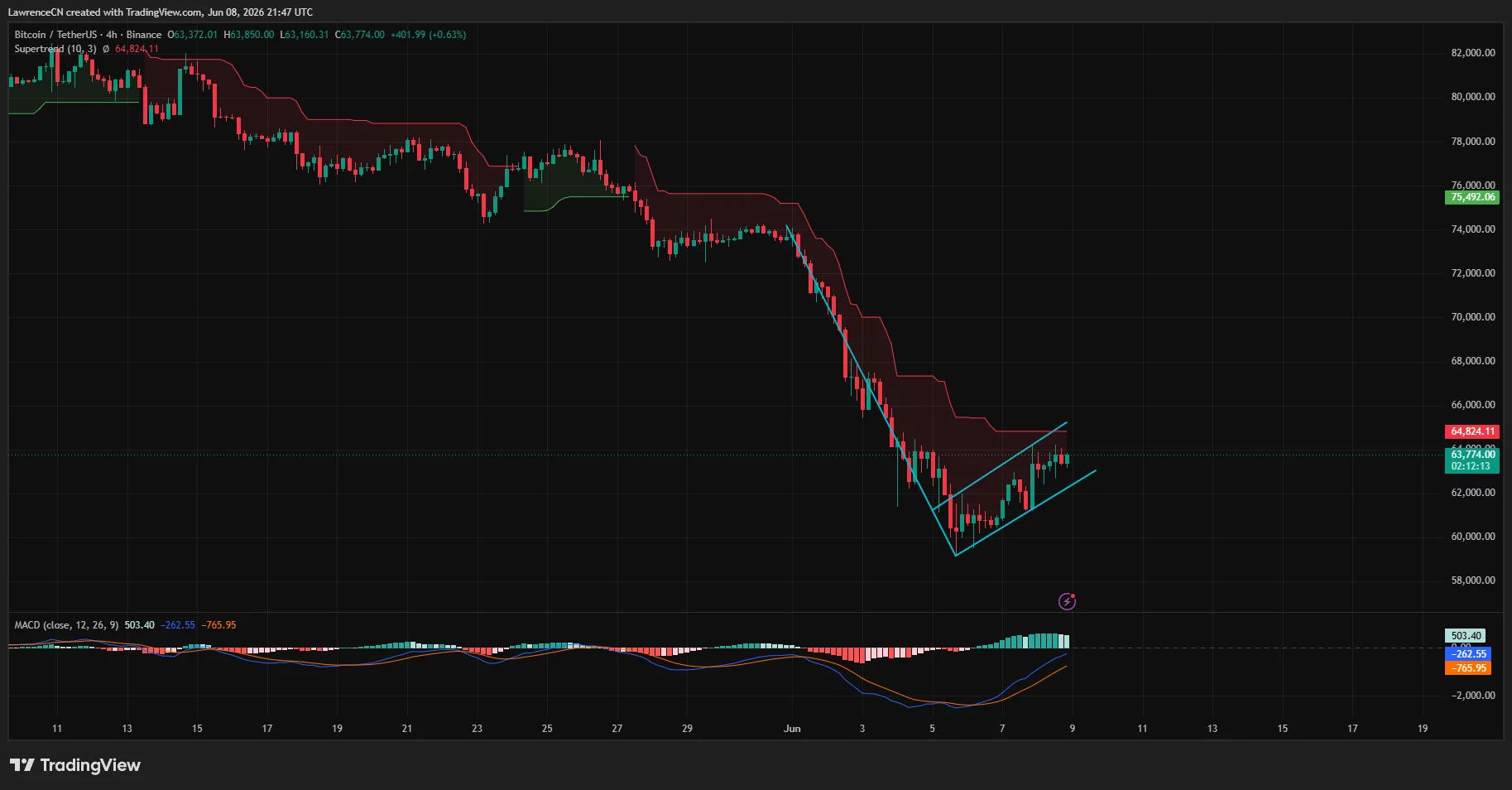
Despite those technical challenges and Bitcoin’s decline of roughly 27% this year, Bernstein maintained its year-end price target of $150,000. The analysts argued that a lack of retail enthusiasm should not undermine Bitcoin’s long-standing role as a store of value.
“Bitcoin being boring this cycle should not be held against it, and does not take away from the long-term ‘store of value’ thesis, in our view.”